
The Moment That Caught Me Off Guard
There are moments in parenting that catch you off guard.
Not because you believe your child is incapable of making mistakes—but because you simply didn’t see that one coming.
Recently, I found myself in that space.
I received an email from the school. They raised concerns about my son admitting to using AI to help with a school group homework presentation. Using AI to understand concepts is not entirely out of place. Nonetheless, it can boil down to academic integrity and misrepresentation of work. If I’m honest, the use of AI is fast becoming normal at different levels in today’s world.
My mind raced: To what extent did he use it? Did he understand what he was doing? If he did, did he consider the consequences?
In that moment, I felt it all at once:
Disappointment.
Concern. Confusion.
A touch of anger.
And then… the quiet questions began.
Did I miss something?
Is this a gap in my parenting?
Could I have done something differently?
If you’re a parent, you probably know that feeling.
The Inner Dialogue We Don’t Always Admit

There is something almost instinctive about how we respond when our children misstep.
We don’t just see the action—we turn inward.
We examine ourselves.
We replay moments.
We question our choices.
I did too.
But as I sat with those thoughts, I began to realize something important:
Children are not perfect reflections of our parenting.
They are individuals—learning, growing, testing boundaries, and yes, sometimes choosing wrongly… just like all of us, parents included.
What Really Matters Next
As uncomfortable as these moments are, they are part of our children’s shaping and becoming.
What matters most is not just what happened—but what happens next.
- What do they learn?
- How do they respond?
- Who do they become because of it?
So instead of just reacting from emotion, I paused. I’ll admit, my first reaction came straight from emotion. Nevertheless, I chose to respond with intentionality when I paused.
The Conversation That Changed Everything
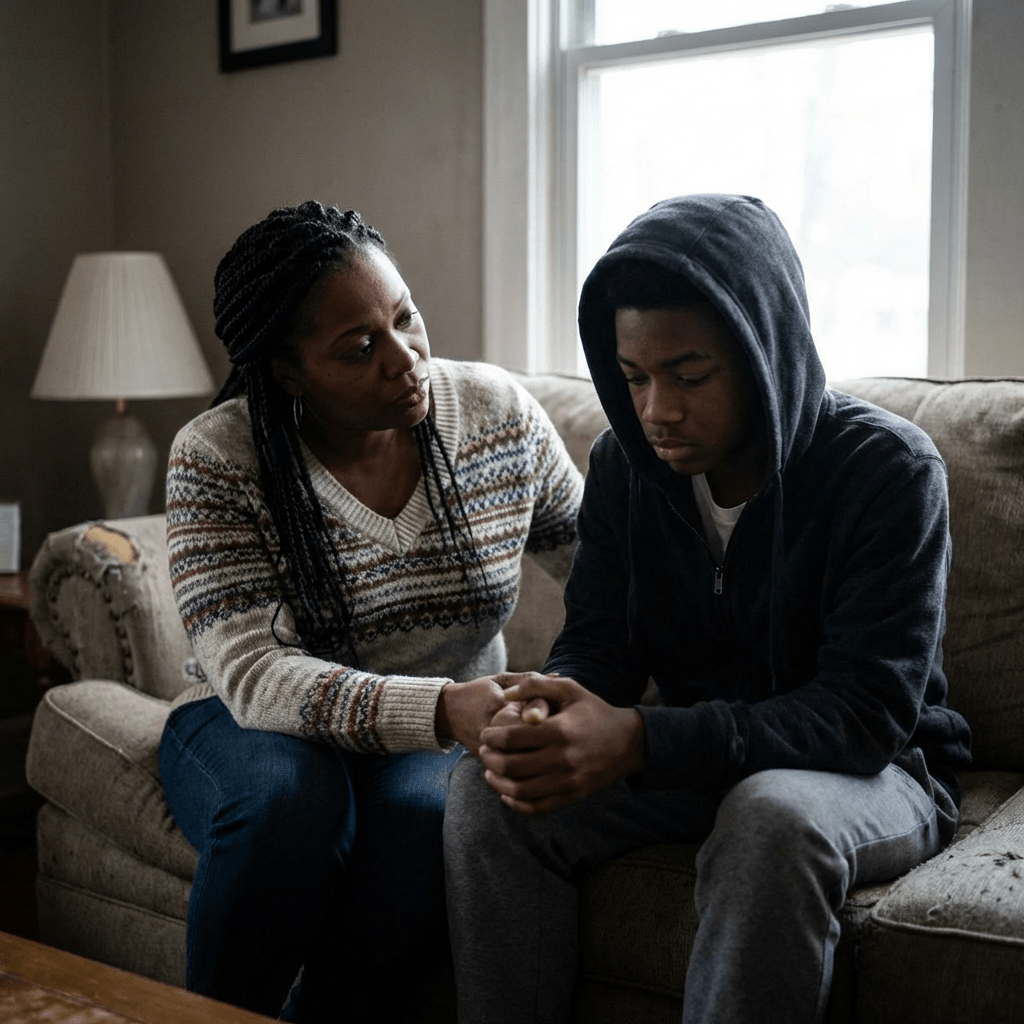
We talked. I listened.
Not a rushed conversation. Not a lecture.
A real conversation. I wanted to connect to understand.
We unpacked what happened.
We spoke about integrity—not just as a rule, but as a value.
We talked about identity—not just who he is right now, but who he is becoming. Who he wants the world to perceive and see him as.
His character. His name. His brand. His faith.
I listened keenly. And something shifted.
Firmness and Grace Can Coexist
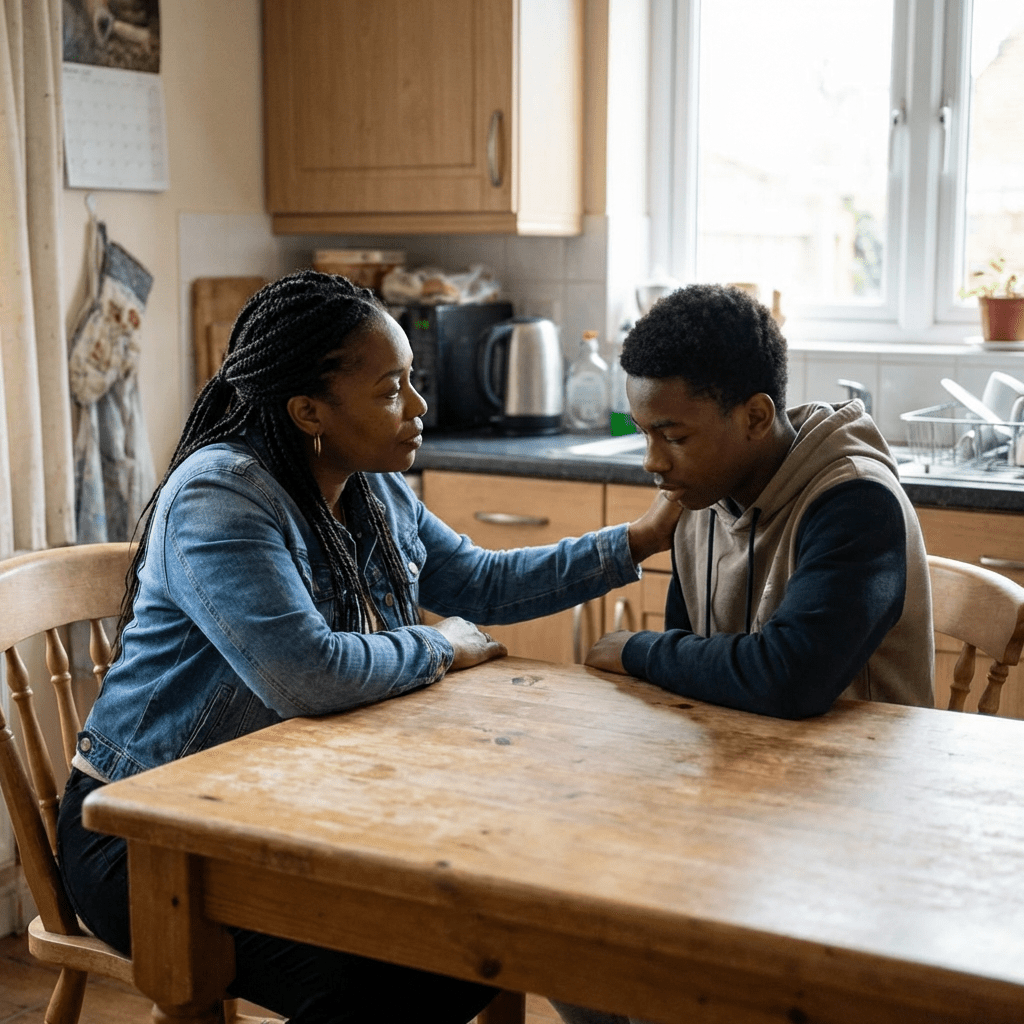
There were consequences—both from school and at home. He had to endure them.
But there was also grace.
He knew what he did was not acceptable.
But he also knew he was not judged.
He felt corrected—but still deeply loved.
And I saw the difference.
I saw how he responded when I reacted emotionally. I also noticed how differently he responded when I paused, slowed down, and listened. He felt seen, heard, and understood.
I was calm and firm.
But I was also present.
That balance— between firmness and compassion—is where real growth happens. I have learned this.
A Lesson for Me as a Parent
This experience didn’t just teach him—it taught me.
I saw clearly the difference between:
- reacting from emotion
- and responding with wisdom
And I was reminded:
Parenting requires more than control.
It requires:
Patience.
Discernment.
Emotional restraint and connection.
And the ability to stay steady—even when you don’t feel steady.
The Truth We Sometimes Forget
There is another layer we don’t talk about enough. As parents, we sometimes carry the weight of our children’s actions as though it defines us.
But it doesn’t.
Your child’s misstep is not your failure. It’s also not the child’s failure.
It is an opportunity:
- to guide
- to lead
- to correct
- to build character
- to connect
- to have deeper conversations that truly shape who they become.
Where Faith Anchors Us
In moments like this, I find myself returning to my anchor, the word, the truth:
“No discipline is enjoyable while it is happening-it’s painful! But afterward there will be a peaceful harvest of right living for those who are trained in this way.”
— Hebrews 12:11
”Train up a child in the way he should go: And when he is old, he will not depart from it..”-Proverbs 22:6
Growth is not always comfortable.
Correction is not always easy or pleasant.
But when handled well, it produces something lasting.
A Gentle Reflection
So now I ask myself—and maybe you too:
- How do I respond when my child disappoints me?
- Do I react first… or do I pause?
- Am I creating space for growth—or just enforcing correction?
- Do my children feel both truth and love when they fall short?
What I’m Learning
I am learning:
Not to panic in these moments.
Not to internalize every misstep.
Not to carry what isn’t mine to carry.
But instead:
To lean in.
To guide well.
To trust the process.
Because in the end…
We are not raising perfect children.
We are raising growing ones; children who will become responsible, independent adults.
Parenting is not about being perfect; it is a journey of purpose and intentionality.
— Ihuoma Dapo Ajayi

 Ihuoma Dapo Ajayi